
Microchips, Registration, and Getting Lost Pets Home: What Canadian Adopters Should Know
The Animal Community Canada — Learn how microchips, visible ID and up-to-date registration work together, what Canadian adopters may pay, how local rules differ, and which steps can improve the chance of a lost pet returning home.

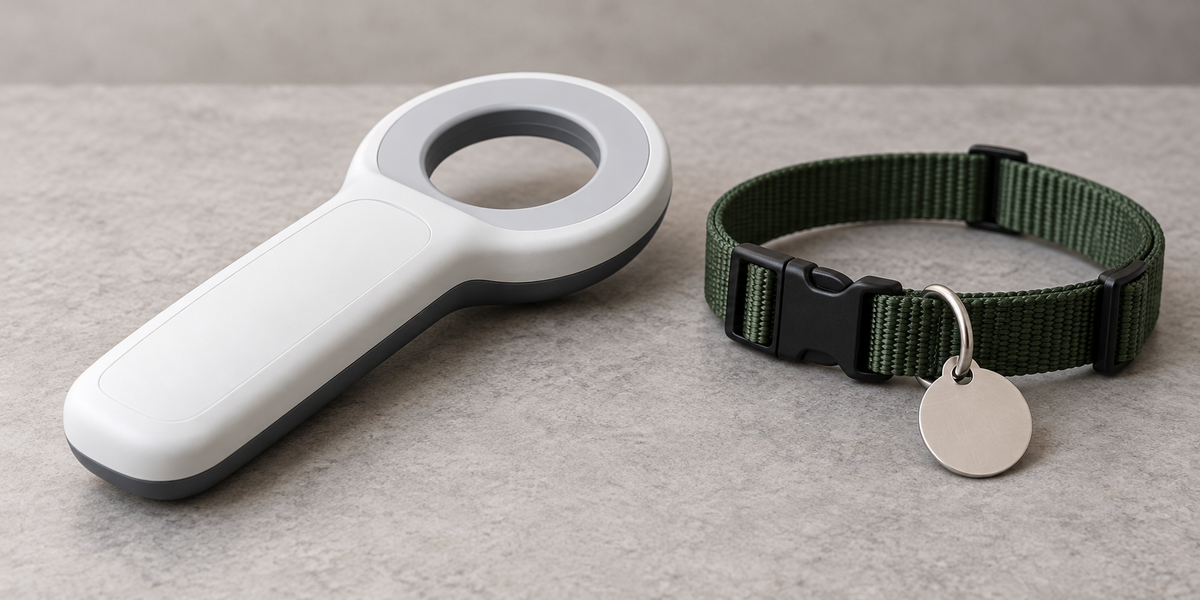
A reader writes: “I’m adopting a cat from a local rescue next month, and they mentioned microchipping. Is it worth it, is it required where I live, and how much should I expect to pay?”
For most adopters, microchipping is a sensible identification step. It is not a GPS tracker, it does not replace a collar and tag, and it cannot guarantee that a lost animal will be found. Its value depends on two things: someone scanning the animal and the chip being connected to current contact information.
What a microchip does
A microchip is a small, rice-sized RFID device implanted under the skin, usually between the shoulder blades. It carries a unique identification number that can be read by a scanner. The chip does not normally store your address or phone number; a registry connects the number to your contact details. NorthCare Animal Hospital’s Canadian overview explains why registration is as important as implantation.
That means a microchip works differently from a GPS device. It does not broadcast your pet’s location. If your pet is lost, someone must find the animal, take it to a shelter, rescue, animal-services office, veterinary clinic, or another location with a scanner, and then use the chip number to reach the registered owner.
A collar tag is still useful because it can identify your pet immediately, without waiting for a scan. A microchip adds a form of permanent identification that cannot fall off or be removed in the same way. Used together, visible identification and a registered chip give a lost pet more than one route home.
What the reunification evidence shows
A 2009 report on research led by Linda Lord, then an assistant professor of veterinary preventive medicine at Ohio State University, described substantially higher return-to-owner rates for microchipped shelter animals. The report said the rate for cats was 20 times higher and the rate for dogs was 2.5 times higher for microchipped animals than for all stray cats and dogs entering the shelters. It also noted that shelters returned microchipped animals more successfully than they expected. The Innovations Report summary provides the study context.
A 2026 guide from Spot Pet Insurance cites figures of 52.2 percent versus 21.9 percent for microchipped and unchipped dogs, and 38.5 percent versus 1.8 percent for microchipped and unchipped cats. Spot’s fact-checked pet-safety guide also emphasizes that an unregistered chip cannot get a pet home.
These figures come from different sources and should not be averaged or treated as a guarantee for one animal. They describe outcomes across populations of lost or shelter animals. A chip improves the chance of reunification; it does not ensure it. The result can still depend on whether the chip is detected, whether the registry information is accurate, and whether the finder follows up.
Is microchipping required in Canada?
There is no single rule that applies identically to every Canadian pet owner. Requirements can vary by province, municipality, licensing system, travel route, and adoption organization. NorthCare’s explanation of Canadian microchip rules says that requirements vary by province and municipality.
The research context identifies several examples and cautions:
- Dogster reports that microchipping became compulsory for cats and dogs in Montreal in 2020.
- Some municipalities may require a microchip before issuing a pet licence.
- Shelters and adoption centres may require microchipping before an animal goes home.
- For international travel, the Canadian Food Inspection Agency requires dogs and cats entering Canada from certain countries to have an ISO-compliant microchip. Pets leaving Canada may also need a microchip before an international destination will issue or accept health documentation.
Those examples do not tell you what applies to your address. Before adoption day, contact your municipal animal-services or bylaw office and ask about current licensing and identification rules. If travel is involved, check the current Canadian Food Inspection Agency requirements and the destination country’s rules. Your rescue and veterinarian can also help identify the right local authority, but neither a general article nor an adoption conversation should replace confirmation of the current rule.
What it costs
Dogster’s 2026 Canada price guide reports an average range of $28 to $100 for microchipping a cat or dog in Canada. The Dogster cost guide notes that prices can vary, so treat this as a planning range rather than a quote.
Ask the rescue or clinic what the price includes. In particular, ask whether the animal is already chipped, whether registration is included, whether a transfer is required, and whether there is a separate registry fee. Some rescues and shelters include microchipping in the adoption fee, so confirm before paying for the procedure again.
If your pet is already chipped, request the chip number and registry details in writing. Ask who is currently listed and what steps are needed to transfer the record to you. Do not assume that bringing the animal home automatically updates the registry.
The practical step many adopters miss
Register the chip in your own name as soon as the transfer is available. Then update your phone number, email address, and address whenever they change. Keep the chip number, registry name, adoption paperwork, and veterinary records together in a place you can access quickly.
At routine veterinary visits, ask the clinic to scan the chip and confirm that it can be read. A veterinarian can also advise on the timing and suitability of microchipping for your individual animal. Microchipping is general identification guidance, not a substitute for veterinary examination or treatment.
Your immediate adoption-day checklist is simple:
- Ask whether the pet has a microchip.
- Request the chip number and registry name.
- Confirm whether registration or transfer is included.
- Complete the transfer using your current contact details.
- Keep a collar and visible identification tag on the pet when appropriate.
- Ask your veterinarian to verify the chip at a routine visit.
Limits, referrals, and a lost-pet response
If your pet is lost now, do not wait for a microchip registry to solve the problem. Contact local animal services, nearby shelters and rescues, your veterinarian’s office, and the registry. Follow local lost-pet procedures and provide a recent photograph and accurate description. If the situation involves immediate danger, cruelty, a road hazard, or another emergency, contact local emergency services or authorities and seek veterinary help where appropriate.
For questions about implantation, timing, health concerns, travel documentation, or your pet’s individual circumstances, speak with a licensed veterinarian. For current local legal or licensing requirements, contact your municipality or the relevant Canadian government agency. The information here is general education and cannot replace professional veterinary, legal, or emergency advice.