Planting Garlic in a Container This Fall: What Works on a Balcony (and What's Uncertain)
Small Plot Season — Balcony garlic can work as a careful fall experiment: use regional planting guidance, protect the exposed pot with mulch, and record winter results without assuming in-ground certainty.

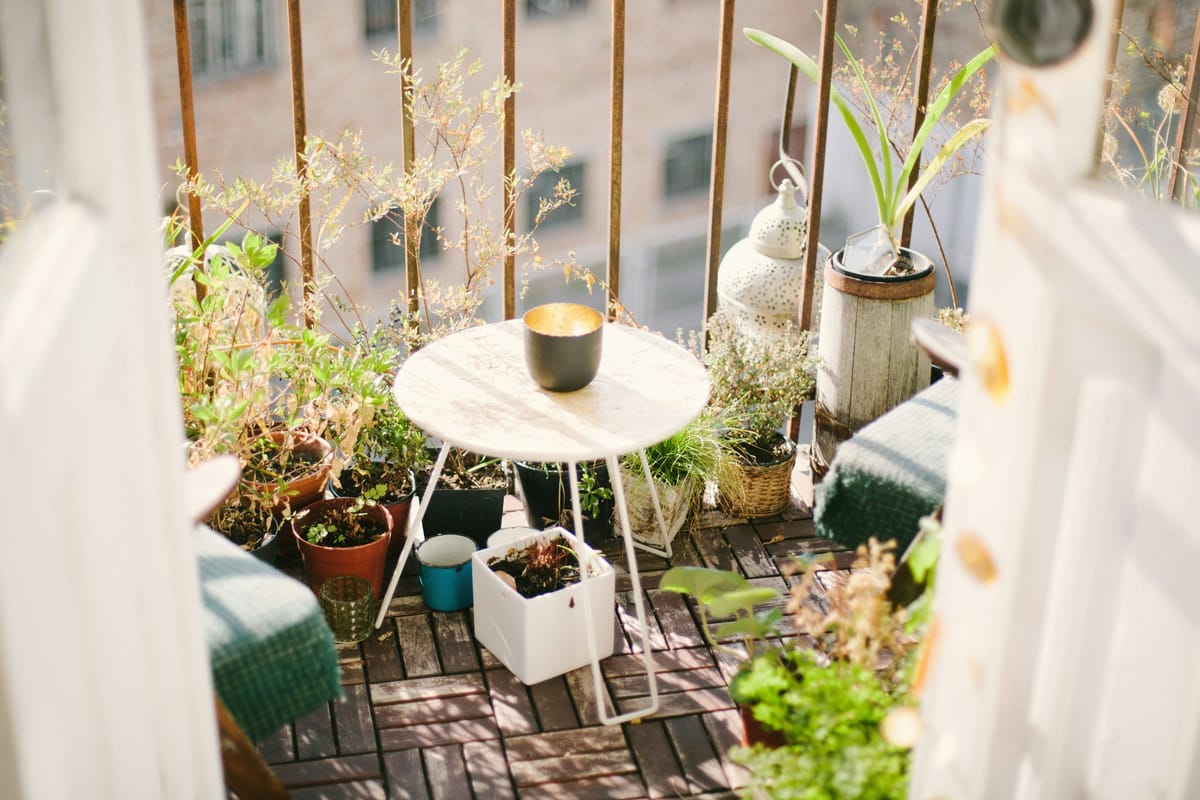
A reader in Toronto wrote with a question that comes up every October: “I have a south-facing balcony and two large pots. Can I grow garlic out there, or is fall-planted garlic strictly an in-ground crop?”
Yes, a balcony pot can be a reasonable small-space experiment. But the evidence is stronger for garlic in garden soil than for garlic overwintering in containers, so the useful answer has two parts: follow the well-established fall-planting basics, then treat the balcony’s winter exposure as an uncertainty rather than a promise.
Why garlic suits a small space
Garlic is a cool-season crop. In Ontario, it is planted in fall and harvested the following summer. It needs a cold period to initiate growth, which is why the crop works on an autumn-to-summer schedule rather than a spring-to-summer one. Hardneck garlic also produces an edible scape in late spring or early summer before the bulb is ready.
That makes garlic appealing for a renter or balcony gardener: the planting occupies a pot through winter, and there is no need to reserve a bed for a long-lived perennial. AgriPure describes garlic as a high-yield crop for a home garden, but that is not evidence that every container will match an in-ground harvest. A pot gives you a practical way to try the crop without claiming more certainty than the sources support.
Choose the planting window for your region
The consistent rule in the sources is to plant about four to six weeks before the ground freezes hard. That gives cloves time to establish roots without encouraging tender top growth too early. Ontario’s production guidance warns that planting too early, too late, or too shallow can reduce winter hardiness: early or shallow cloves may send up shoots vulnerable to winter injury, while late cloves may not develop adequate roots.
Ontario windows are regional, not one province-wide date. AgriPure suggests late September to early October for northern Ontario, mid-October to late October for central and eastern areas, and late October to early November for southern and southwestern Ontario. It gives about 10°C at planting depth as a useful soil-temperature target. A city calendar gives Ottawa and Kingston roughly October 1–20, Toronto October 10–November 1, and Windsor October 15–November 5. Outside Ontario, the national guide places Calgary earlier, with planting finished by mid-October, while coastal British Columbia can extend into November.
Those calendars are calibrated for in-ground conditions. A balcony container has soil exposed to cold air on all sides, so it may cool more quickly and less predictably than garden soil. Using the regional window as a starting point and leaning toward its earlier side on an exposed, elevated balcony is a cautious practical judgment, not a container-specific rule verified by the research. I could not find a container-specific Ontario planting calendar in the supplied sources; that evidence gap matters.
A practical container sequence
- Choose a large pot rather than a small planter, and confirm that it drains freely. Larger soil volumes generally give the roots more room and provide more buffer than a tiny container, but the supplied sources do not establish a minimum pot size for balcony garlic.
- Use fertile, free-draining potting mix. Ontario’s field guidance emphasizes fertile soil and recommends testing phosphorus and potassium; field nutrient figures should not be copied into a pot.
- Separate the bulb into individual cloves. Plant each pointed end up. Ontario guidance notes that upside-down cloves still grow, but often produce curved shoots and misshapen bulbs.
- Plant 5–7.5 cm deep, measured from the clove tip, and space cloves about 15 cm apart. Use the published range only if the pot can provide enough mix above and below the cloves; do not make shallow planting the price of fitting in one more clove.
- Mulch immediately with 10–15 cm of clean straw or shredded leaves. AgriPure gives 15–20 cm for northern Zones 3–4. In a pot, mulch is a sensible protective measure because the root zone is exposed on every side, not proof that the crop will survive every winter.
- Consider a cold-hardy hardneck such as Music, Russian Red, Chesnok Red, or Persian Star. The supplied Canadian guide describes hardnecks as reliable in cold regions and softnecks as less cold-hardy and better suited to Zone 6 and warmer. Hardneck garlic is described as needing roughly six to ten weeks between 0°C and 10°C for vernalization and proper bulb development; do not assume an exposed balcony pot will supply that cold period reliably.
Keep the boundaries visible
No supplied source documents container-garlic overwintering success rates. In-ground garlic is the better-supported case. A severe winter could damage cloves in a pot that would survive in the ground, and results may vary with wind, exposure, pot volume, drainage, and the building’s heat. If losing the crop would be a serious disappointment, make the first pot an experiment rather than your only garlic plan.
The fertilizer numbers in the John Boy Farms guide are field recommendations. They are not a recipe for a container. Ontario also says garlic fertilizer recommendations are not fully determined and that nitrogen needs vary with soil, organic matter, previous crop, and weather. Avoid translating per-acre figures directly into a balcony feeding schedule.
Variety availability and suitability for your particular microclimate are also unverified here. The variety and hardiness statements come from the supplied guides, not from a balcony trial by Small Plot Season.
Your carry-forward task
This week, identify your city or region, choose the matching end of the planting window above, and record the date you intend to plant. Check the local freeze outlook before committing, then prepare the pot, drainage, planting stock, and clean mulch. For Toronto, the cited city window is October 10–November 1; do not substitute that range for northern or southern Ontario guidance. If you are outside Ontario, use the national regional comparison rather than guessing from the calendar.
Plant, label the variety and date, and record what happens through winter. That observation is the most useful first step toward learning whether your own balcony can overwinter garlic.