When the Grocery Budget Tightens: Cooking Through a Hard Financial Season in Canada
Table North — When money tightens, regional cooking can still hold pleasure and meaning: use seasonal abundance, adaptable staples, and careful preservation without asking the kitchen to solve problems meant for financial professionals.

A reader writes
“We’re renewing our mortgage this year and every grocery run feels heavier. I still want to cook food that feels like ours—regional, seasonal, connected to where we live. How do I keep that alive when money is the thing on my mind?”
That is a food question, but it is also an economic one. This issue looks at the financial context available in the research, then turns to a practical kitchen response. I am a food writer, not a financial professional or dietitian; this is not financial, medical, or individualized nutrition advice.
Why the pressure matters at the table
Consumer insolvencies have reached their highest quarterly volume since 2009, according to the Canadian Association of Insolvency and Restructuring Professionals (CAIRP). Its Q1 2026 release reports 37,121 consumer insolvency filings. A later CBC report says 37,523 Canadians filed in the second quarter of 2026. Those are different quarters, not competing versions of the same figure.
The pressure is regional, too. CAIRP reports that British Columbia’s consumer insolvencies rose 16.2 percent year over year in Q1, Prince Edward Island’s rose 15.3 percent, and Ontario’s rose 14.7 percent. A separate Q1 debt report says Ontario and Quebec together accounted for more than half of national filings, while its provincial table reports 12,480 filings in Ontario and 8,610 in Quebec. Because that report is a secondary compilation, treat its detailed counts as a reference point rather than a substitute for the underlying Office of the Superintendent of Bankruptcy release.
Mortgage renewals add another household pressure. One rate analysis, citing Canada Mortgage and Housing Corporation figures, puts approximately 1.15 million Canadian mortgages up for renewal in 2026 and another 940,000 in 2027. A 2026 forecast estimates that about 33 percent of mortgage holders could face higher monthly payments by year-end; among fixed-rate borrowers renewing in 2026, it estimates an average increase of around 20 percent. These are reported estimates, not a prediction for any individual household. Equifax data reported by Canadian Mortgage Professional found mortgage delinquency stress most acute in Ontario and British Columbia.
The point is not to turn the grocery aisle into a financial bulletin. It is to acknowledge why food may become the flexible line in a household budget—and why skill, seasonality, and local knowledge can make a constrained kitchen feel less stripped of pleasure.
A regional kitchen response
The most useful answer is not a universal cheap-meal list. It is a way to make decisions when prices and availability change:
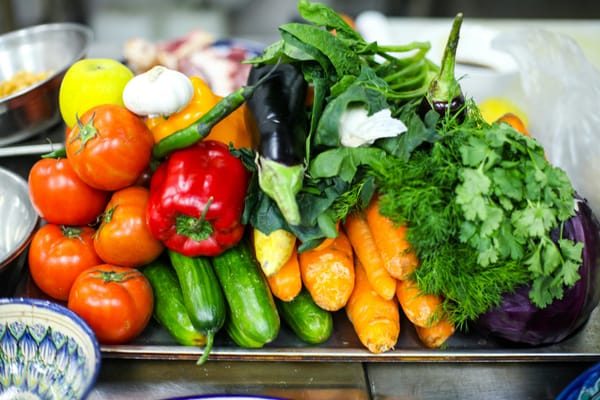
- Start with what is abundant and reasonably priced in your region and season. An autumn table built around squash in Manitoba will not look like a coastal table organized around salmon, and neither needs to imitate the other.
- Preserve selectively when an ingredient is at its best price and quality. Freezing, pickling, or drying a manageable amount can extend a seasonal purchase into a later month. Choose a method you already know, and follow current official food-safety guidance rather than improvising preservation times or acidity.
- Keep a small repertoire of adaptable bases: a soup, a grain or legume dish, and a braised vegetable preparation. The value is not a fixed recipe; it is knowing how to change the ingredients without losing the shape of the meal.
- Ask producers and market vendors about seconds, end-of-day pricing, or bulk quantities. Availability and savings vary, so ask rather than assume; buying more is not a bargain if it will be wasted.
- Let the season set the menu before adding specialty ingredients. A regional ingredient used thoughtfully can carry a meal’s sense of place without requiring an elaborate shopping list.
Frugal cooking is not the opposite of Canadian food culture. Many food traditions here—including distinct Indigenous foodways, each with their own seasonal knowledge and harvesting, preserving, and sharing practices—are rooted in attentiveness to place and season. Those traditions should not be flattened into one national story. The narrower point is that thrift, skill, and meaning can coexist.
Limits and a practical conclusion
This article does not tell anyone how to manage debt, choose a mortgage, or eat for a medical condition. If debt feels unmanageable, speak with a qualified professional; CAIRP’s material points readers toward Licensed Insolvency Trustees and provides a directory. For health or nutrition questions, use Health Canada and the Canada Food Guide. Economic figures are time-sensitive and reflect the publication dates of their sources; regional experience will differ.
For the kitchen itself, begin small: choose one ingredient that is genuinely abundant near you, ask how it is priced at the end of the market day, and decide on one adaptable preparation. Put some by only if you can do so safely and use it later. Then repeat with the next season. The connection between Canadian food culture and frugality is not a contradiction to manage. It can be a practice of paying attention to where you are, what is available, and what your household can carry.
The kitchen can help preserve pleasure and belonging. It should not be expected to solve a mortgage renewal, a credit-line problem, or an insolvency notice; those require their own professional conversation.
Sources
- CAIRP: Q1 2026 Canadian Insolvency Statistics — Canadian Association of Insolvency and Restructuring Professionals
- Consumer insolvencies continue to climb in Canada — CBC News
- Canadian insolvencies hit 17-year high in Q1 2026 — Canadian Mortgage Professional, reporting Equifax Canada data
- Canadian Debt Report Q1 2026 — MyClearDebt, a secondary compilation of OSB data
- Canada Mortgage Rates Increase In October 2026 — Immigration News Canada, citing CMHC renewal figures
- Mortgage Rates Forecast Canada 2026–2030 — nesto.ca