
Why Groceries Feel Steadier Now — and How to Plan Around What Hasn’t Changed
Weeknight Canada — See why slower food inflation hasn’t lowered grocery bills, then build flexible meals around recurring costs, shared ingredients and local availability—without treating national averages or forecasts as promises about your next shop.

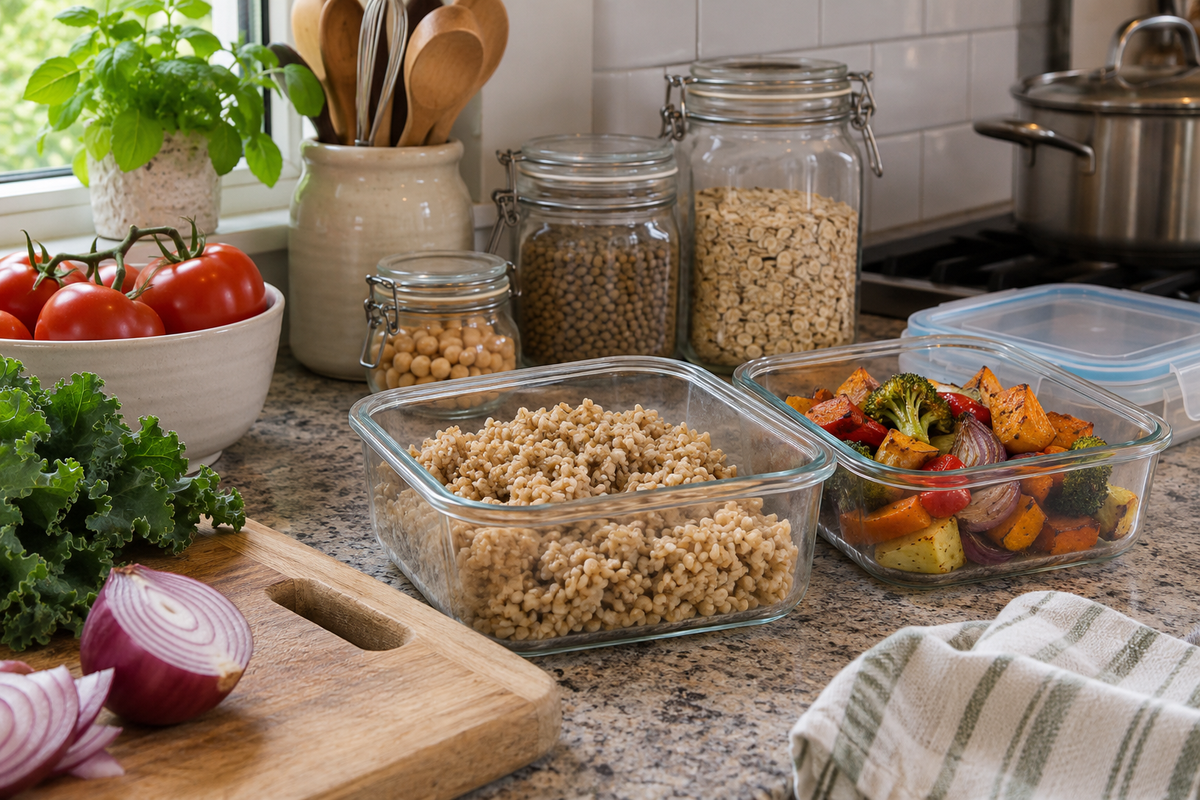
Marta in Kitchener asks: “The news keeps saying food prices have stabilized, but my receipt says otherwise. Should I change how I plan my week’s meals, or is this the new normal I need to budget around?”
The short answer is that slower price increases do not mean lower prices. Statistics Canada’s figures show food-price inflation easing in 2026, while selected grocery items still have substantial prices. For meal planning, that points less toward chasing every sale and more toward building a flexible routine around the costs you actually face.
What the numbers tell us—and what they don’t
Statistics Canada’s Food Price Data Hub brings together food-price information, Consumer Price Index context, and links to monthly retail-price data. Its reported year-over-year food-price readings were 3.9 per cent in July 2026, 2.8 per cent in September, and 2.0 per cent in October. That is a slowdown in the rate of increase, not evidence that prices returned to an earlier level.
The distinction helps explain why a grocery bill can still feel high. The Hub’s September 2026 snapshot lists a two-litre carton of milk at $5.50 and a 675-gram loaf of white bread at $3.58. Those are national average retail prices for selected products, not a promise of what any particular store or shopper will pay. Statistics Canada’s accompanying commentary also notes that food prices have mostly stabilized while feeding a family can still feel more expensive. Both observations can be true at once.
National figures do not describe every region or household. The 2026 Dalhousie Food Price Report gives provincial forecasts, but characterizes them as directional guidance based on regional knowledge rather than precise predictions. It forecasts below-national-average increases in British Columbia and Manitoba, and above-national-average increases in Alberta, Ontario, Quebec, New Brunswick, and Nova Scotia. These are forecasts, not a measure of what every household has already experienced.
Policy announcements are not this week’s grocery prices
There have also been federal announcements about affordability and the food system. In January 2026, the Prime Minister announced the Canada Groceries and Essentials Benefit, formerly the GST Credit. The release says its amount will increase by 25 per cent for five years beginning in July 2026, with a one-time payment equivalent to a 50 per cent increase in 2026. It estimates that a family of four could receive up to $1,890 that year and about $1,400 a year for the following four years; a single person could receive up to $950 that year and about $700 a year for the next four years. The release says more than 12 million Canadians will receive support. Eligibility and individual amounts are not covered here; consult the official announcement for details.
In June, the Prime Minister launched a National Food Security Strategy backed by $3.2 billion in investments over ten years. Announced components include a $1-billion Food-Link Fund for food storage, processing, and distribution, and a $750-million Controlled Environment Agriculture program intended to support year-round domestic production of fresh fruits and vegetables. These are measures concerning benefits, supply, and infrastructure. They do not change what you pay at the till this month, so a weeknight dinner plan should not depend on them arriving first.
A flexible plan for a weeknight
Start with a short list of meals your household already likes, then choose ingredients that can move between them. A pot of beans or cooked grain, for example, can become a soup one night, a filling for another meal, or a side. This is a practical way to use ingredients across the week; it is not a guarantee of a particular saving.
- Check a few items you buy regularly against Statistics Canada’s monthly average retail-price table. Its food-price tools also let users explore average prices by building a grocery basket. Those figures can provide context over time, but your store, location, and choices may differ.
- Choose ingredients that can work in more than one meal. Keep a planned use for leftovers or extra produce so a flexible plan is less likely to leave food unused.
- Let local availability guide produce choices. Canada’s growing seasons vary, and the federal announcement about year-round production reflects the limits of the country’s short growing season. It does not establish which produce is cheapest or best where you live right now.
- Make one batch component do more than one job. A pot of beans, a grain, or a soup base can take some weeknight preparation off your hands without requiring a rigid meal schedule.
The useful target is not a perfect forecast of next month’s prices. It is a routine that can absorb a changed price, a different local selection, or a week when plans shift. If you track a small basket of your own recurring purchases occasionally, you can make decisions from your household’s experience rather than assuming a national average is your receipt.
Limits and a practical conclusion
Statistics Canada’s average prices and national inflation readings are broad measures; they are not a substitute for checking local prices. Remote and Northern communities may face different price realities. The National Food Security Strategy announcement includes a reform of Nutrition North Canada intended to improve food-related access, affordability, and long-term sustainability in Northern communities, but this issue does not assess the program or local outcomes.
The Dalhousie provincial outlook is directional, not a precise prediction. The government benefit announcement has eligibility conditions that are not explained here. Check the linked official releases for the full terms. This is practical meal-planning information, not individualized financial or nutrition advice.
Marta’s receipt and the headline can both be telling the truth: food inflation can slow while the prices people already pay remain high. Plan around your own recurring costs, keep meals adaptable, and treat national averages and forecasts as context—not as a promise about your next shop.
Sources
- Statistics Canada, Food Price Data Hub
- Statistics Canada, Monthly average retail prices for selected products: Food, Table 18-10-0245-02
- Prime Minister of Canada, Canada Groceries and Essentials Benefit announcement, January 26, 2026
- Prime Minister of Canada, National Food Security Strategy launch, June 11, 2026
- Agriculture and Agri-Food Canada, Food-Link Fund announcement, October 5, 2026
- Agriculture and Agri-Food Canada, Controlled Environment Agriculture investment, October 30, 2026
- Dalhousie University Agri-Food Analytics Lab, 2026 Food Price Report


