
Why Winter Puddles Can Be Dangerous: Antifreeze and Your Pet
Pet-Safe Canada — Learn how winter antifreeze spills can threaten pets, why puddles and roadside snow are unsafe to drink, simple prevention habits, and what to do immediately if exposure is suspected.
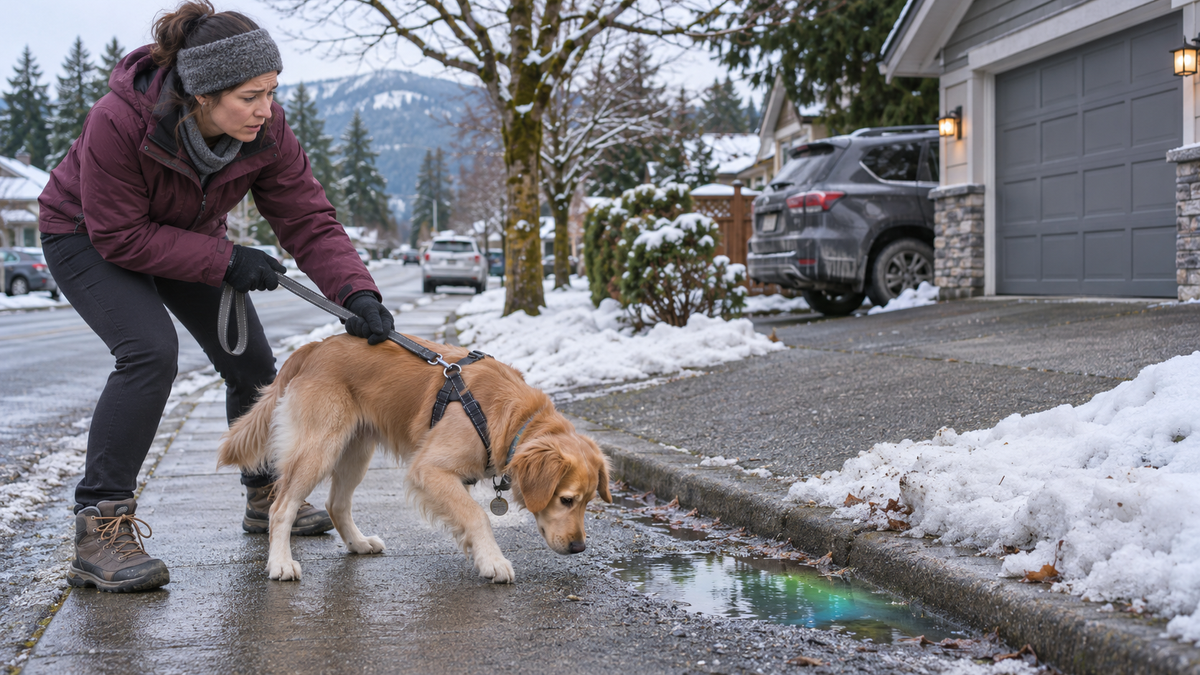
A Port Coquitlam reader asks: “My dog loves sniffing puddles on our winter walks. A neighbour mentioned antifreeze. How worried should I be, and what should I do if he ever licks something I’m not sure about?”
The practical answer is to take the possibility seriously without assuming every puddle is contaminated. Some antifreeze contains ethylene glycol, which can be highly toxic to dogs and cats. If you suspect your pet has contacted or swallowed antifreeze, do not wait for symptoms: contact a veterinarian or emergency veterinary service immediately. For everyday prevention, keep pets away from suspicious spills, puddles, and areas where vehicles are serviced, and don’t let them drink from outdoor puddles or eat snow near roads and parking areas.
What the sources establish
PoCo West Animal Hospital in Port Coquitlam, BC, says many antifreeze products contain ethylene glycol and that even small amounts may cause serious internal effects. Its article notes that the sweet taste and smell can attract animals. Antifreeze exposure may happen when a pet licks a spill on pavement or a garage floor, drinks contaminated water or snow, or walks through fluid and later ingests it while grooming. The hospital also notes that spills can be difficult to notice: antifreeze may be colourless or brightly coloured and often odourless to people.
Winter conditions can make a spill harder to spot. The BC hospital describes increased winter use of automotive products, leaks from older vehicles, snow that masks spills, and possible residue on sidewalks, roads, and parking areas. That does not mean every wet patch is antifreeze. It does mean that an unknown puddle near vehicle traffic is not a safe drinking source for a pet.
North Care Animal Hospital, serving North and West Vancouver, describes ethylene glycol poisoning as a serious hazard for cats and dogs. It says the amount that can cause harm depends on the product, concentration, and species, and that even small exposures may be serious, especially for cats. Suspected ingestion is an emergency requiring immediate veterinary guidance.
PetMD makes an important distinction: some antifreeze used for RVs, boats, cabins, and other equipment contains propylene glycol rather than ethylene glycol. The names are similar, but the risks differ. Don’t try to judge safety from the product name or guess which ingredient was involved. If you can identify the product without delaying care or putting yourself at risk, that information may help the veterinary team.
PoCo West lists possible early signs after exposure, including lethargy, vomiting, uncoordinated movement, and increased thirst, and warns that signs may progress quickly. These are not a way to rule exposure in or out at home. A pet may need urgent attention even if signs are mild or not yet apparent.
Reduce the chance of contact
A few repeatable habits can help lower the risk around home and on walks:
- Check driveways and garages regularly for vehicle leaks. Keep your pet away from any suspected fluid or contaminated area.
- Clean up spills promptly using pet-safe methods, but don’t let your pet near the spill while you work. If you are unsure how to handle it safely, seek appropriate local guidance.
- Keep pets away from places where vehicles are stored or serviced, including garages and sheds where automotive products may be present.
- Store automotive chemicals securely and out of reach. Keep containers closed and follow their labels.
- Watch for suspicious puddles in driveways, garages, parking areas, and along walk routes. Choose a different route or keep your pet clear rather than allowing a sniff, lick, or drink.
- Wipe your pet’s paws after outdoor walks to reduce the chance of grooming residue from them. If you think the paws contacted antifreeze, contact a veterinarian promptly rather than relying on wiping as treatment.
- Don’t let pets drink from puddles or eat snow near roads, driveways, or parking areas. The contents of an unknown puddle cannot be reliably identified by appearance.
PetMD also advises avoiding ethylene-glycol-based ice melts and suggests choosing a pet-safe alternative. Check product information rather than assuming that a product is safe based on its name or marketing. This issue does not endorse any brand or provide a product-by-product assessment.
If you suspect exposure
Treat suspected contact or ingestion as urgent. Keep your pet away from the source, and contact your veterinarian or the nearest emergency veterinary service immediately. Tell them what happened, when you noticed it, and what product may be involved, if known. Bring or photograph the label only if you can do so safely and without delaying the call or travel. Do not wait for symptoms, and do not use this article or a product label to decide that an exposure is harmless.
The possible signs described above can progress quickly, but their presence or absence cannot establish how much exposure occurred or what care is needed. A veterinarian must assess the situation. If you are in Port Coquitlam, PoCo West Animal Hospital publishes contact information for winter safety concerns; elsewhere, contact your regular veterinarian or a local emergency animal hospital. If there is an immediate wider emergency, follow local emergency services and authorities.
Limits of this guidance
This is general education, not a diagnosis or treatment plan, and it does not replace veterinary care. The cited clinical guidance includes veterinary hospitals in British Columbia and a US-based veterinary education resource; local service availability varies. This article does not provide exposure amounts, timelines, or treatment instructions. The statement that the Canadian Veterinary Medical Association recognizes antifreeze toxicity as a medical emergency is reported by PoCo West Animal Hospital; the research package does not include direct CVMA material to verify that statement independently. The supplied sources also do not establish that any particular puddle or spill in a reader’s neighbourhood is contaminated. When exposure is possible, contact a veterinarian rather than relying on general information.
Sources
- Dangers of Antifreeze Poisoning in Winter Months — PoCo West Animal Hospital, Port Coquitlam, BC
- Ethylene Glycol Poisoning in Pets: Emergency Guide — North Care Animal Hospital, North and West Vancouver, BC
- Ethylene Glycol Poisoning in Dogs — VCA Canada Animal Hospitals
- Antifreeze Poisoning in Dogs: Symptoms, Treatment and Prevention — PetMD, reviewed by Renee Schmid, DVM, DABT, DABVT


