A Realistic Small-Space Garden Plan for Canadian Renters
Small Plot Season — A realistic container garden helps Canadian renters match crops, pots, light, temperature, and watering to the space they actually have. A staged plan and four-line record make care manageable and show what to repeat next season.

Start with the space, not the wish list
A balcony, windowsill, porch, or limited plot can grow food, but it cannot behave like a backyard bed. Containers warm and dry more quickly, hold fewer plants, and may need to move when light or weather changes.
Ask what the space can support consistently. Start with one or two crops you will actually check, then learn how sun, wind, pot size, and watering interact.
That experiment-first approach fits Growing With Beccalynne’s practical garden notes, which emphasize growing from the space you have without perfect soil or endless time. For a renter, that is better than promising an abundant harvest before planting.
This is general educational gardening information, not individualized horticultural, pesticide, or food-safety advice.
Match the plant to the space
Emily Hamel’s Parks Canada guide to planting a small-space garden offers a container-friendly menu:
- Lettuce and spinach for deck planters or flower boxes.
- Cherry tomatoes, using a compact, bushy, or miniature variety.
- Radishes and peppers for larger containers.
- Peas and beans, provided they have a support system to climb.
- Herbs such as thyme, rosemary, basil, mint, parsley, and oregano.
The list is a menu, not a requirement. Count any trellis, bamboo, wire, or netting as part of the footprint.
The Health Canada grow-at-home toolkit uses garden beans in a simple sprouting activity. It notes that sprouting may take 7 to 10 days, with a root emerging before the seed is planted in soil. Beans are therefore a useful first experiment: you can test a warm, bright spot and your daily-care habit before committing to several large pots.
For spinach, the guide points to cooler weather such as early spring or late summer to help prevent it from going to seed. That is a reminder to match a crop to the conditions you actually have.
Start seeds simply
You do not need a complicated setup. The Parks Canada guide describes two approaches:
- For a clear-cup start, dampen a paper towel or cotton balls, add seeds, and cover the cup with a clear lid or plastic wrap with a few holes. The guide suggests two seeds in a small cup or five in a larger one. Keep it bright and damp.
- For a soil start, use a cleaned container with bottom holes and a light, porous seed-starting mix. Moisten it, follow the seed package’s depth, and remove any clear cover once seeds sprout.
When a cup-started sprout is about an inch tall, or a soil-started plant has three to four new leaves, move it to a larger pot. Hamel’s examples are practical anchors:
- Lettuce and spinach: deck planters or flower boxes, about two plants per container.
- Peas and beans: rectangular boxes or larger deck planters with supports, about three plants per box.
- Herbs: a 1-gallon pot, about 6 by 6 to 7 inches deep.
- Radishes: a 2-gallon pot, about 8 by 8 inches deep, with 6 to 7 radishes per container.
- Tomatoes: a 5-gallon pot, about 10 by 10 inches deep, with one plant per pot.
- Peppers: a 5-gallon pot, with one to two plants per pot.
Use moistened, nutrient-rich potting soil, with a little compost if desired. Clean recycled pots before planting, and make sure drainage holes or a tray system are part of the setup.
Plan for temperature shifts
In a colder climate, keep pots inside near a bright window, then move them outside when warmer. Harden plants by putting them out for a few hours each day, bringing them back in, and extending the time over at least a week. Bring pots inside on cool nights below 10°C.
A direct-sun balcony can become very hot. During hot periods, move pots into shade or check them more often for water. These are conditions to manage, not a single Canada-wide calendar: the research does not establish one schedule for every province, building, or exposure.
Water without false precision
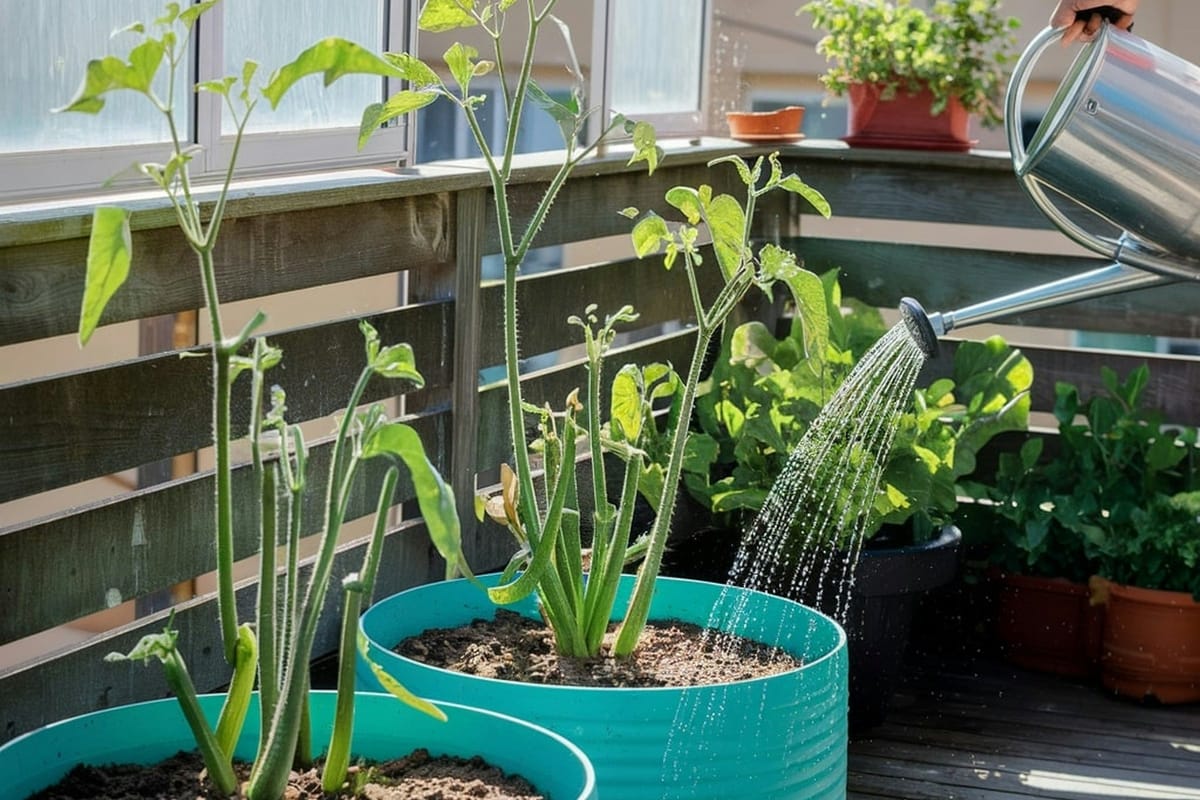
Small containers have less moisture reserve than garden beds, so watering becomes part of the plan. The evidence here supports a condition-based habit rather than a universal schedule: keep sprouting paper towels damp but not wet, keep seed-starting soil moist without soaking it, and water established plants as needed. The Parks Canada guide also uses “every couple days” as a care reminder, while noting that hot, sunny balconies may need more frequent attention.
For broader provincial context, Ontario’s irrigating vegetable crops page was inaccessible behind a site check during preparation, so I am not extracting irrigation rates or schedules from it. The practical conclusion here is narrower: inspect the growing medium, keep it moist rather than waterlogged, and adjust attention when heat and direct sun increase.
I also reviewed the Gardening Life Community Project newsletter, Home and Dome Gardening, and The Maritime Gardening Newsletter. Their Canadian, one-plant-at-a-time, and low-input framing informed the tone, not the crop-specific instructions.
Where small plans fail
- The plant and pot do not match. Choose a compact tomato or a crop that fits a flower box.
- There are too many containers. More pots create more places to check, move, and water.
- The growing medium swings between dry and soaked. Damp is the target described by the guides, not a permanently waterlogged pot.
- Indoor plants go straight outside. Harden gradually and pay attention to cool nights.
- The first season is judged only by yield. Health Canada’s activity treats observation and daily care as part of learning, so record what grew and what needed attention before deciding what to repeat.
A realistic small-space garden is not the fullest arrangement you can fit on day one. It is the arrangement you can keep noticing long enough to learn from.