
Buying a Used EV in Canada? Start With Battery Evidence
Preowned Canada — A used EV’s dashboard range is only a starting clue. This issue explains which battery records to request, how warranty language changes the picture, and how to treat missing or conflicting evidence before purchase.

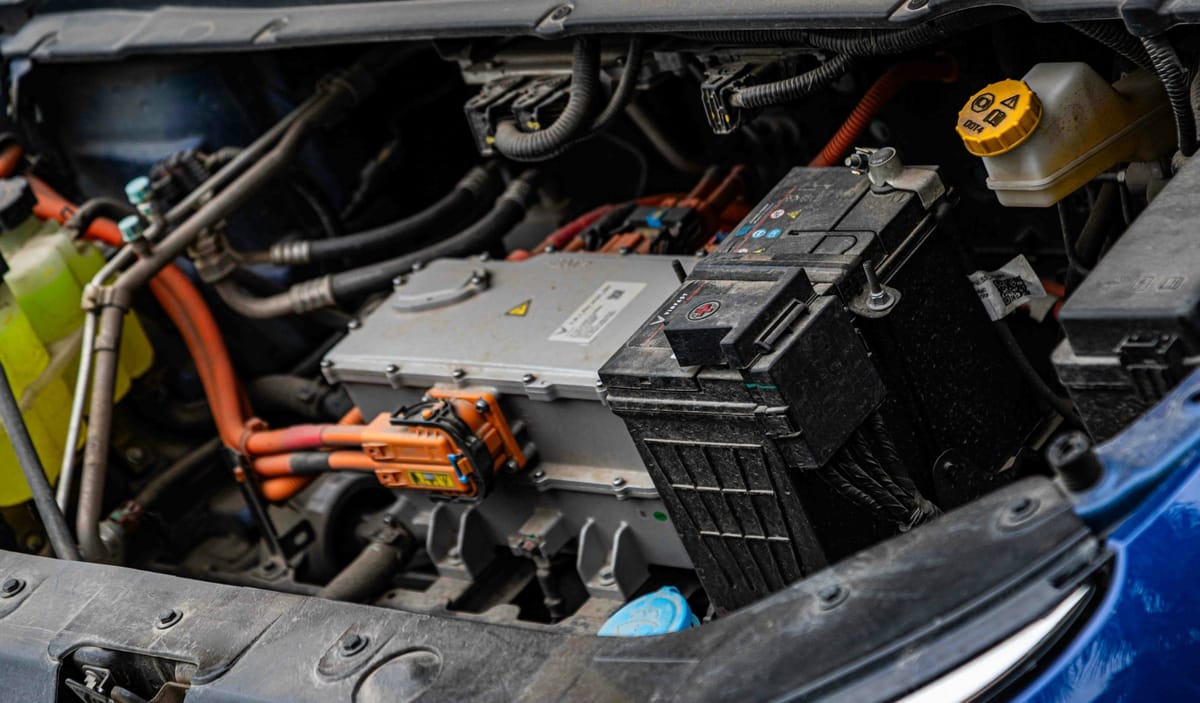
A used electric vehicle can have a clean history report, a tidy interior, and a convincing dashboard range estimate while its most expensive component is poorly documented. The first task is not to find a magic battery percentage. It is to replace assumptions with records, measurements, and clear limits.
Battery evidence sits beside the usual used-vehicle checks, not in place of them. A lien search, recall check, ownership history, inspection, and warranty review still matter. An EV adds one important condition gap that an odometer cannot answer: how much usable battery capacity remains?
Battery condition changes the value conversation
Battery condition matters because the pack is central to both range and remaining value. Driving.ca's report on a Canadian battery-health program describes a battery pack as representing roughly 30 to 50 per cent of a used EV's total value, depending on the vehicle. That is reported industry context, not a formula for pricing every vehicle.
The practical implication is simple: a low price is not automatically a bargain if the seller cannot explain the battery's condition, and a reassuring range display is not proof of capacity. Battery evidence should help compare similar vehicles, clarify remaining coverage, and identify what still needs an independent check.
Read a report, not just a score
A battery-health report is useful only when you can see what sits behind its headline number. Carnex's explanation of its battery-health reports identifies State of Health, remaining capacity in kilowatt-hours, cell-voltage consistency, and estimated range. It describes extracting data from the battery-management system through an OBD-II scan.
Look for these details:
- State of Health, or SoH: the stated estimate of remaining capacity compared with the reference condition, including the provider's definition.
- Usable capacity: the remaining energy figure in kilowatt-hours, with the vehicle line and battery configuration identified.
- Cell information: any consistency or imbalance findings, plus an explanation of what the test cannot detect.
- Identity and timing: the VIN, odometer, test date, provider, and method. A report that cannot be tied to the vehicle is weak evidence.
Treat a score as a summary, not a universal grade. The supplied material does not establish a Canadian-wide battery-health scale that makes scores from different providers, vehicle lines, or battery chemistries directly interchangeable. A report is also a snapshot: it cannot promise future degradation, rule out every charging-system fault, or establish that a pack has never been damaged.
Treat warranty as a separate evidence trail
Battery health and battery warranty answer different questions. Health describes measured condition at one point in time. Warranty describes contractual coverage, limits, measurement method, and remedy. Do not use one as a substitute for the other.
CAA-Quebec's guidance on EV batteries says most high-voltage batteries come with coverage of eight years or 160,000 kilometres, while noting that manufacturers commonly define a capacity defect around 70 to 75 per cent during the warranty period. These are broad observations, not a promise for a particular VIN. The guidance also notes that the remedy may be a new battery, a refurbished unit, or a repair, depending on the terms.
Terms can change by vehicle line, year, trim, and battery design. Mitsubishi Motors Canada's warranty explanation makes that variation explicit. Obtain the manufacturer's VIN-specific answer on:
- the original in-service date and kilometre limit;
- the capacity threshold and how it is measured;
- transfer to a subsequent owner;
- the remedy if the threshold is not met; and
- exclusions, prior repairs, software changes, or recall conditions.
“Battery warranty included” is a lead, not a complete record. Keep written confirmation with the purchase documents and check that the VIN and odometer match.
Put the battery number in Canadian context
A report does not predict the range on every Canadian route or in every season. Displayed range, charging experience, and usable capacity are related but different. Ask what conditions surrounded the test; do not turn one mild-weather drive into a year-round promise.
Charging equipment deserves its own check. Recurrent's used-EV inspection guidance recommends checking history and recalls and, where possible, trying both slower and faster charging. A practical test can show whether the port, cable, and vehicle accept a charge at the expected level. It cannot prove long-term battery health, and a failed test may involve equipment or network faults.
Keep these distinctions clear:
- A battery report describes measured condition; it does not replace a physical or underbody inspection.
- A range display is a live estimate; it is not the same as a capacity test.
- A charging demonstration checks a system interaction; it is not a warranty decision.
- A recall record shows whether a campaign appears addressed; it does not confirm remaining coverage.
History, liens, ownership documents, accident or repair records, provincial transfer requirements, and an independent inspection can expose risks a battery scan cannot.
Make the evidence part of the written file
Practical EV documentation guidance from Canada Drives' used-EV paperwork checklist points to a battery-warranty transfer confirmation, a recent battery-health report, service and software history, and standard registration, bill of sale, history, and lien documents. That is a useful prompt, not a substitute for provincial rules or manufacturer terms.
Before money changes hands, assemble a file containing:
- the VIN-tied report, date, method, measurements, and limitations;
- the manufacturer's written warranty response, including transfer and remedy language;
- recall completion and service records, including documented battery or software work;
- vehicle history, lien status, ownership paperwork, and province-specific transfer documents; and
- an independent inspection and charging demonstration, with unresolved items written down.
Missing evidence should remain labelled “unknown.” Do not convert a missing report into a pass or fail, or let a verbal assurance outweigh supporting documents. If evidence conflicts, ask the manufacturer or a qualified automotive professional to interpret the VIN-specific record.
The linked material combines independent automotive reporting, consumer guidance, a Canadian manufacturer explanation, dealer-published diagnostic information, and practical buying documentation. It helps define what to request; it does not create a national battery score or settle a vehicle-specific dispute.
This is general educational information, not individualized automotive, legal, financial, insurance, or safety advice.