First Frost Is a Deadline for Tender Crops, Not Your Whole Garden
Northern Garden Notes — Treat your average first frost date as a planning window: protect or harvest tender crops early, leave hardy vegetables longer, and record how your own yard shifts the calendar.
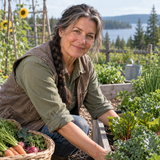
“My first frost date is October 12. Does that mean the garden is finished on October 12—and what should I do in the two weeks before it?”
That Ottawa question captures the useful way to think about frost: it is a planning threshold, not a guaranteed appointment and not a universal closing date. Your job is to separate tender crops from hardy ones, then give each group a sensible harvest or hold plan for your region and yard.
Read the date as a window
The 2026 city figures in this compiled Canadian first-frost table are historical averages based on Environment and Climate Change Canada climate normals for 1991–2020. They are 50th-percentile averages: half of years have frost earlier and half later, with individual years varying by two to three weeks. The figures include Saskatoon around September 12, Regina September 17, Winnipeg September 20, Calgary September 21, Edmonton September 23, Quebec City September 28, Montreal October 7, Ottawa October 12, Halifax October 18, Toronto November 1, Vancouver November 30, and Victoria around December 15.
They do not become a more precise forecast because the calendar says 2026. Begin watching forecasts two to three weeks before your city's average date. Treat that earlier point as the start of a decision window: you may still have useful growing time, but tender crops should no longer be left to chance.
Your garden can frost before the station number suggests it will. Official temperatures are measured 1.5 metres above ground at airport stations. On a clear, calm night, the ground surface in a garden can run 2–3°C colder than the station reading, and cold air can collect in low-lying yards. From two to three weeks before the average date, use a clear-night forecast of 4°C or below as a frost watch for tender crops. That is a cautious planning rule, not a promise that every plant will freeze.
What first frost ends
A first light frost usually marks the end of the tender season: tomatoes, peppers, and other frost-sensitive crops need a harvest, protection decision, or a willingness to lose them. It does not end the useful life of the garden.
Kale, Brussels sprouts, carrots, parsnips, leeks, cabbage, and spinach can continue for weeks after first frost; on the BC coast, some can continue through winter. Many improve in flavour after light frost. The more meaningful end point is the first hard freeze, defined here as −4°C or colder, which typically arrives two to four weeks after the first light frost. Fading day length matters too: below about 10 hours of daylight, growth stops regardless of temperature.
That is why a Winnipeg gardener with a September 20 average should be decisive with tender crops but not rush carrots and kale. A Victoria gardener may have tender-season time until around mid-December, and in mild winters frost may not arrive until January. The gap between Saskatoon and Victoria is about three months, so a national calendar cannot tell you what your own bed is doing.
Use the frost window in sequence
Two to three weeks before the average date:
- Check overnight forecasts each evening, especially for clear, calm conditions and lows at or below 4°C.
- Harvest peppers before frost. Green peppers can continue ripening to red off the vine.
- Bring green tomatoes indoors to ripen in a paper bag.
- Harvest winter squash and pumpkins before frost and cure winter squash at room temperature for about 10 days.
- Dig potatoes once the tops have died back.
In late September, or at the comparable garlic window for your region, the Canadian planting calendar recommends:
- Plant hardneck garlic cloves 10–15 cm deep and 15 cm apart.
- Mulch the bed with 10–15 cm of straw. Garlic planted in this window is intended for harvest the following July.
When frost is imminent:
- Harvest the last tender tomatoes, peppers, winter squash, pumpkins, fall broccoli, and cabbage rather than treating the average date as a safe extension.
- Keep carrots and kale in the ground when your conditions allow; light frost is not the same as a hard freeze.
After the first light frost and harvest:
- Pull frost-killed plants and compost healthy material; a fall compost pile can heat well.
- Cut perennial herbs down while leaving 5–8 cm of growth.
- Add 5–8 cm of compost to beds so it can break down over winter.
- Store carrots and beets in cool, humid conditions, such as damp sand at 0–4°C.
- Drain and store hoses; clean and oil tools before winter storage.
On the BC coast, the season may be a transition rather than a shutdown: that calendar also lists hardy overwintering spinach, mâche, and claytonia for direct sowing, along with garlic, shallots, and spring bulbs. That advice is regional; do not transplant it unchanged to the Prairies or a colder inland site.
Keep the regional limits visible
These dates describe city averages, not your yard. Exposure, elevation, a low hollow, and proximity to water can move your useful frost window. Toronto's November 1 average is associated with Lake Ontario releasing stored summer heat, while a colder pocket near a listed city can behave differently. For a smaller town, prefer a figure tied to a named nearby weather station over a provincial average. The figures here are compiled references, not a single government publication.
The same caution applies next spring. A Southwestern Ontario gardening guide reports an average 2026 last frost of April 27 for Windsor and a hard freeze as late as May 21 in 2021; it is useful local context, not an official forecast. For 2026 planning, the Old Farmer's Almanac has introduced a last-frost map; Small Farm Canada's report on that map says it combines past climate data with extended weather projections and indicates that some regions may run roughly one to two weeks earlier or later than typical. That is a planning aid, not a promise. Monitor local forecasts beyond any average date.
Your carry-forward task
This week, write three numbers in your garden notebook:
- Your city's average first frost date.
- Your best estimate of how your site differs from that average: a colder hollow, warmer south-facing slope, or proximity to water.
- The date two to three weeks before the average, when nightly forecast-watching begins.
After frost, add one observation: which bed or crop froze first? Next spring, use the same notebook for your last-frost window. By next fall, you will have a frost plan calibrated to your actual yard rather than a generic national calendar.